Hedge Trimming Norwood: Recycling and Sustainability
Hedge Trimming Norwood is committed to responsible green waste management and creating a truly eco-friendly waste disposal area for our neighbourhoods. Our Norwood hedge trimming services are designed not just to shape and maintain hedgerows, but to ensure that cuttings, branches and garden rubbish are diverted away from landfill and reused where possible. This page explains our targets, partnerships and practical steps to build a sustainable rubbish gardening area across Norwood.
 In keeping with local borough approaches to waste separation — such as separate collections for food, garden and dry recycling in neighbouring boroughs — we sort material on-site and at transfer points to improve recycling rates. Our team follows the bins-and-collection guidance used across Lambeth and Croydon and liaises with transfer stations to match local separation schemes. By aligning Norwood hedge trimming activities with borough strategies we minimise contamination and maximise the value recovered from garden waste.
Eco-friendly waste disposal area: what we do
We operate a designated eco-friendly waste disposal area for green waste from hedge maintenance and garden clearance. This includes on-site segregation of wood, green clippings, soil and non-organic debris; secure storage for recyclable plant pots and timber; and a processing stream for chipping and composting. Our sustainable rubbish gardening area is designed to be modular so it can be set up at community worksites or used at client properties for larger clearances.
- Local transfer stations: We work with nearby transfer stations and civic amenity sites to drop off sorted materials for further processing.
- On-site recycling: Wood chipping for mulch and composting of green waste is prioritised.
- Materials recovery: Re-using soil, stones and bricks where safe, and diverting metal and plastic to appropriate recycling streams.
Recycling percentage target and low-carbon transport
Our ambition for hedge trimming in Norwood is clear: a 70% recycling and reuse target for all garden and hedge waste by the end of 2028, with an interim 55% target within the next 12 months. These figures cover diversion from landfill through composting, mulching, donation and material reuse. We track tonnage across categories and report progress internally to ensure steady improvement.
To lower transport emissions associated with Norwood hedge maintenance, we operate a growing fleet of low-carbon vans. These include electric vans for short urban trips, hybrid vehicles for mixed routes, and route-optimisation software to minimise mileage. Our objective is to have at least 50% of our operational fleet classed as low-carbon within two years, reducing the carbon footprint of every rubbish collection and transfer run.
We also implement best practice loading and consolidation to reduce the number of journeys to transfer stations. Combining efficient logistics with priority recycling targets delivers a practical route to lower emissions and better resource recovery from hedge trimming and garden rubbish.
Partnerships with charities and community reuse
We actively partner with local charities, community gardens and reuse networks to extend the life of materials removed during Norwood hedge trimming. Timber suitable for community projects is donated to workshops and social enterprises; surplus soil and compost is offered to allotment groups; and usable plant pots and garden furniture are passed to local reuse organisations. These partnerships create social value while keeping useful materials in circulation.
 Working with neighbourhood charities and volunteer groups helps build community composting hubs and supports local environmental education programmes. Our collaborations are structured around formal collection schedules, safe handling protocols and shared goals for reusing or recycling at least 70% of the materials we collect during garden clearances.
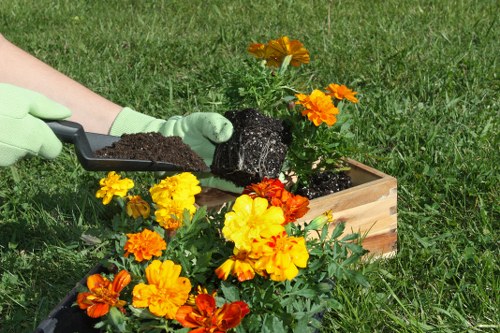 We emphasise transparency in our charity partnerships by maintaining records of donations and reuse volumes. This ensures that material diverted from the waste stream is traceable and contributes to measurable outcomes for both environmental and social benefits.
Practical sustainable rubbish gardening area practices
Key operational practices that make our sustainable gardening areas effective include: trained staff for correct segregation, safe temporary storage to prevent cross-contamination, onsite chipping for mulch production, and reuse-first policies for items that are still serviceable. We also run small-scale trials to test composting mixes and ensure the quality of material returned to gardens and community spaces.
In line with the boroughs' waste separation approaches, our crews label bags and bins to match local schemes and provide guidance (where permitted) to residents on how hedge clippings should be presented for collection. Clear labelling and consistent sorting significantly reduce contamination and increase the proportion of material that can be turned into valuable compost or woodchip.
Our commitment is to keep improving the environmental performance of Norwood hedge services: lowering carbon emissions through low-carbon vans and smarter logistics, increasing the reuse and recycling rate toward our 70% goal, and deepening partnerships with charities and local transfer stations. Hedge trimming in Norwood can and should be a model for sustainable urban garden waste management — we are working every day to make that a reality.